Yes. You can start MMA with zero experience, no fighting background and average fitness. Most people who walk into an MMA class for the first time have never thrown a proper punch or done a takedown, and a well-run class is built for exactly that person. You learn the pieces one at a time, and sparring comes later, when you are ready for it.
Here is what that actually looks like, and what to expect at EMMA Club in Alexandria.
Why MMA feels intimidating (and why it shouldn't)
What most people know about MMA comes from watching professional fights. That is the very end of the road: athletes with years of training, fighting under pressure. A beginner class looks nothing like that.
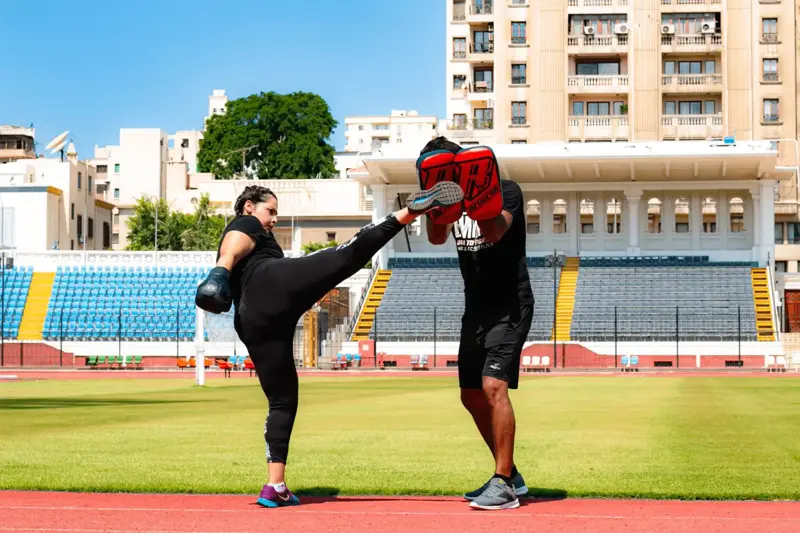
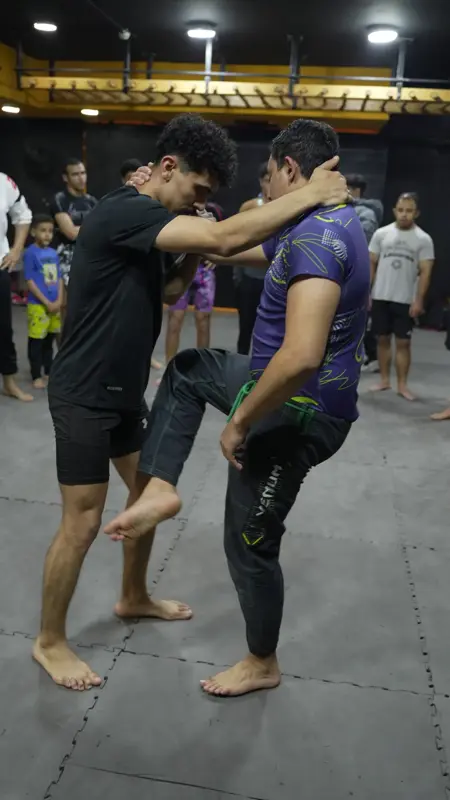
A good MMA class is mostly drilling. You practise a technique slowly with a partner, then a bit faster, then on pads, then in controlled situations. Nobody is trying to win. Everyone is trying to learn.
What MMA actually includes
MMA mixes three broad areas. You do not need to know any of them before you start.
- Striking: punches, kicks, knees and elbows, plus how to defend them. This is the part that overlaps with boxing, kickboxing and Muay Thai.
- Wrestling and clinch: stance, takedowns, defending takedowns (sprawling), and controlling someone at close range or against a wall or cage.
- Ground grappling: positions on the mat, escapes, getting back up, and submissions. This overlaps with Brazilian Jiu-Jitsu.
The real skill of MMA is connecting these: moving from striking to a takedown, or getting back up after being taken down. That comes with time.
How EMMA Club's MMA week works
Our MMA program is led by Coach Islam Elmessiry, who also leads our Boxing Mix program. It follows a structured week that mixes striking, grappling and sparring, so you are not just doing random techniques every session.
Classes run at both branches:
- Kafr Abdo branch (25 Mina Street, Sidi Gaber): Sunday, Tuesday and Thursday, 8:00 to 9:30 PM.
- Roshdy branch (1 Syria Street, Deebmall): Saturday, Monday and Wednesday, 8:30 to 10:00 PM.
Each session is 90 minutes, which gives enough time to warm up properly, learn a technique, drill it and put it into practice. You can check the full timetable for both branches.
Sparring is earned, not forced
This is the biggest worry for most beginners, so let's be clear: you will not be thrown into a fight on day one.
Sparring is a training tool, not a test of toughness. Before you spar, you need to know how to defend yourself, how to control your own power, and how to work safely with a partner. Until then, you build up through steps like these:
- Technique drilling with a cooperative partner.
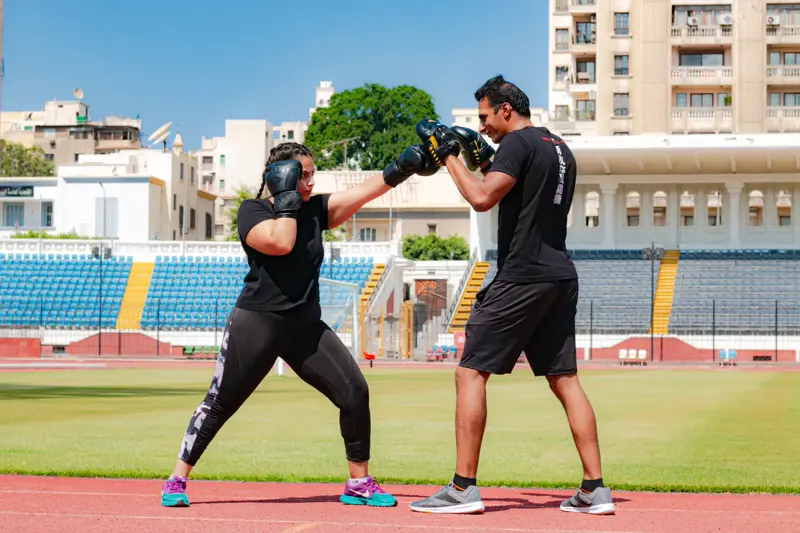
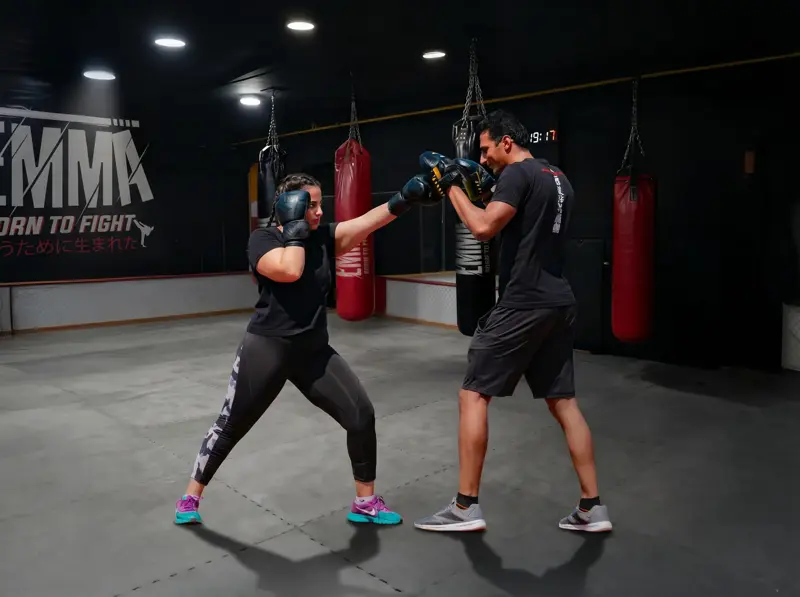
- Pad work and bag work to build power, timing and fitness.
- Positional drills, such as starting from one position on the ground with a specific goal.
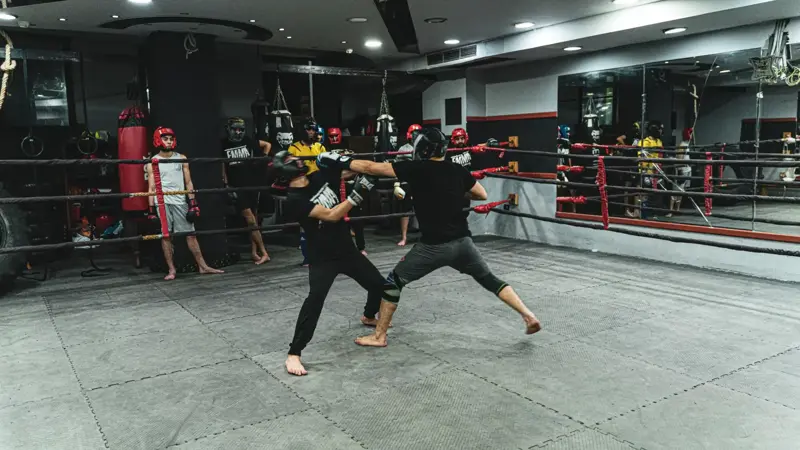
- Light, controlled sparring with clear rules, once the coach thinks you are ready.
The coach decides when you are ready, and you can always say you are not. A good gym protects new people because new people are the future of the team.
Your first few weeks
Week 1–2: Everything is new
Expect to feel clumsy. Stance, footwork and basic grappling positions will feel strange. You will probably be sore in places you did not know existed. That is normal and usually fades within a couple of days.
Week 3–6: Things start to connect
You start recognising positions and remembering combinations. Your conditioning improves noticeably. Drills that felt exhausting become manageable.
Month 2 and beyond
You start to understand how striking and grappling fit together. Depending on your progress, the coach may start introducing controlled sparring.
Do you need to do another sport first?
No. Some people like to build a base in a single discipline first, and that is fine, but it is not required. If you want extra time on one area, EMMA Club also runs Brazilian Jiu-Jitsu, wrestling and striking programs. The VIP unlimited plan covers all programs at the branch you join, which is useful if you want to add sessions. See the membership page for prices at each branch.
Practical tips for your first class
- Wear comfortable sportswear without zips or buttons, and bring water.
- Trim your nails. Grappling partners will thank you.
- Arrive a little early and tell the coach it is your first class.
- Tell the coach about any injuries or health conditions.
- Go at your own pace. Nobody expects you to keep up with people who have trained for years.
FAQ
Am I too old to start MMA?
Many people start in their 30s or later. You may progress at a different pace, and you should listen to your body and check with a doctor if you have health concerns, but age alone is not a reason not to start.
Do I need to be fit before my first MMA class?
No. Fitness improves through training. The coach adjusts intensity, and you can take breaks when you need them.
Will I get hurt?
Any contact sport carries some risk, but beginner sessions are mostly drilling with control. Sparring is introduced gradually and with supervision.
What is the difference between MMA and self-defense classes?
MMA is a sport with rules and a full training system. Self-defense focuses on real-world situations. Both are useful; they just have different goals.
The best way to find out is to step on the mat. Your first MMA class at EMMA Club is free at either branch, so you can see how it feels before you commit.